 MeetupThe Motivation for MLOps
Threads / Watching models in production / 2023
Watching models in production in 2023
65 sessions
 PodcastML in Production: A DS from Ubisoft Perspective
ClaimJean-Michel Daignan describes an end-to-end recommendation pipeline that processes game telemetry, builds targets, trains models with Spark, schedules production jobs with Airflow, monitors predictions, and runs A/B tests.16:49
 MeetupDeclarative MLOps: Streamlining Model Serving on Kubernetes
ClaimRahul Parundekar says unit tests should check serving behavior and returned scores, rather than replace the training-time evaluation performed on held-out data.26:47
 Challenges and Opportunities in Building Data Science Solutions with LLMs
ClaimEvaluating language-model output is difficult because prompt engineering and quality assessment are less standardized than traditional machine-learning metrics such as R-squared.21:35
 Want High Performing LLMs? Hint: It Is All About Your Data
Pushed backVikram Chatterji says there is not yet a broadly adequate metric for evaluating prompts across models, while practitioners often default to BLEU scores and similar measures.31:56
 PodcastThe Birth and Growth of Spark: An Open Source Success Story
ClaimMatei Zaharia says Databricks is integrating machine learning with data analytics by recording model inputs and outputs in tables that can be monitored and analyzed with data-warehouse features.28:55
 DevTools for Language Models: Unlocking the Future of AI-Driven Applications
ClaimKnowledge retrieval improves model accuracy and behavior by providing relevant context, and can also reduce operating cost.10:11
 Cost Optimization and Performance
ClaimMonitoring can use end-user feedback, behavioral signals, human labeling, or synthetic evaluation by another language model.24:51
 Agentic Relationship Management
ClaimAs agent action layers become more integrated with external platforms and social networks, they will need monitoring, rollback or interruption capabilities, and human involvement.7:47
 Building Defensible Products with LLMs
ClaimHumanloop builds developer tools for prototyping LLM applications, understanding their production performance, and using evaluation data to improve them over time.0:36
 Using LLMs to Punch Above Your Weight!
ClaimCameron Feenstra says evaluation metrics are needed to determine whether a model performs as well as it did during testing and whether its performance changes over time.17:49
 PodcastWhy is MLOps Hard in an Enterprise?
ClaimMaria Vechtomova says their MLOps maturity assessment was conducted at the product level, including questions about version control and whether the code, model artifact, and data used for a deployment could be traced.17:42
 LLMs in Production Conference - Part II
ClaimThe LLM application stack is coalescing around foundational models, vector databases, model tuning and building, developer SDKs and tools, and model operations such as monitoring and experimentation.0:00
 The Emerging Toolkit for Reliable, High-quality LLM Applications
ClaimReliable LLM applications must address operational issues such as cost, performance, availability, model drift, timeliness, and privacy.5:14
 Pitfalls and Best Practices: 5 Lessons from LLMs in Production
ClaimTeams should use objective evaluation during prompt engineering, in production monitoring, and when changing models or prompts to avoid regressions.7:27
 Scalable Evaluation and Serving of Open Source LLMs
ClaimWaleed Kadous says open-source models can be good enough for summarization, retrieval, and assistant generation, even though they are not universal replacements for GPT-4.7:07
 Beyond the Hype: Monitoring LLMs in Production
ClaimClaire Longo leads ML Solutions Engineering for Customer Success at Arize and helps customers integrate Arize as an ML observability solution.0:21
 Building Production Copilots
ClaimTristan Zajonc says conversational copilots can support knowledge discovery, ad hoc queries, and information retrieval.6:00
 Embeddings and Retrieval for LLMs: Techniques and Challenges
Pushed backAnton Troynikov argued that heuristics in robotics and retrieval systems are brittle and that models should eventually handle more of the required tasks.32:54
 Building and Curating Datasets for RLHF and LLM Fine-tuning
ClaimProduction interactions with a prompt-based model can be monitored and reviewed by users or domain experts to create evaluation data and possible fine-tuning data.27:01

 Evaluating LLM-based Applications
Pushed backJosh Tobin disputes the common view that human evaluation is always the best way to evaluate language models, arguing that automated model evaluation can be useful and that the best approach combines automated and human evaluation.13:34
 Evaluation
Pushed backJosh Tobin disputes relying on public benchmarks for application development, saying they are nearly useless when they do not measure a company's user data and outcomes.18:17
 PodcastTreating Prompt Engineering More Like Code
Pushed backMaxime Beauchemin favors static, code-defined prompt cases rather than having an AI dynamically generate and evaluate the entire test set.37:50
 Building Reliable AI Agents
ClaimAgent workflow nodes can be tested and evaluated using practices from traditional software engineering, including unit tests, evaluations, and distilling a generic model into a smaller specialized model.15:43
 Building Products
ClaimNatalia Burina proposes evaluating use cases along accuracy and fluency axes, because LLMs are useful when fluency matters more than accuracy and risky when high accuracy is required.11:51
 LLMs For the Rest of Us
Pushed backJoseph Gonzalez says benchmark rankings can be misleading because some models abstain from unusual questions while people often prefer an answer.10:25
 Lessons Learned Productionising LLMs for Stripe Support
ClaimOffline evaluations and agent testing looked positive, but agents used the generated prompts much less than expected after launch.4:36

 Combining LLMs with Knowledge Bases to Prevent Hallucinations
ClaimScott Mackie says information retrieval systems will still be required because language models do not have access to real-time data through their model weights.10:23
 Unleashing Code Completion with LLMs
ClaimMonmayuri Ray evaluates code-completion outputs using honesty, harmlessness, and helpfulness.3:31
 PodcastMLOps at the Age of Generative AI
ClaimBarak Turovsky's framework evaluates generative AI use cases by the required accuracy, fluency, and consequences of mistakes.18:38
 Incorporating LLMs in High-stake Use Cases
ClaimBreaking large tasks into smaller tasks can make them easier; for example, information retrieval can evaluate each paragraph rather than an entire document.4:47
 The Confidence Checklist for LLMs in Production
ClaimRohit Agarwal recommends captchas, rate limits, and monitoring to limit the cost of abusive traffic and DDoS attacks.7:47

 Everything We've Been Taught About ML is Wrong
ClaimEmmanuel Ameisen says that models can sometimes evaluate generated outputs better than human graders because they agree more closely with gold ratings.13:36
 UX of an LLM User
ClaimJasper monitors latency and error spikes with Datadog and uses fallback models or providers when performance problems occur.28:29
 LIMA: Less is More for Alignment
ClaimEvaluating truthfulness, especially for domain-specific questions without expert annotators, is difficult.10:06
 MLOps vs LLMOps
ClaimAparna Dhinakaran says LLM observability needs to trace whether the retrieved context was correct and relevant, especially when vector stores are used.23:01
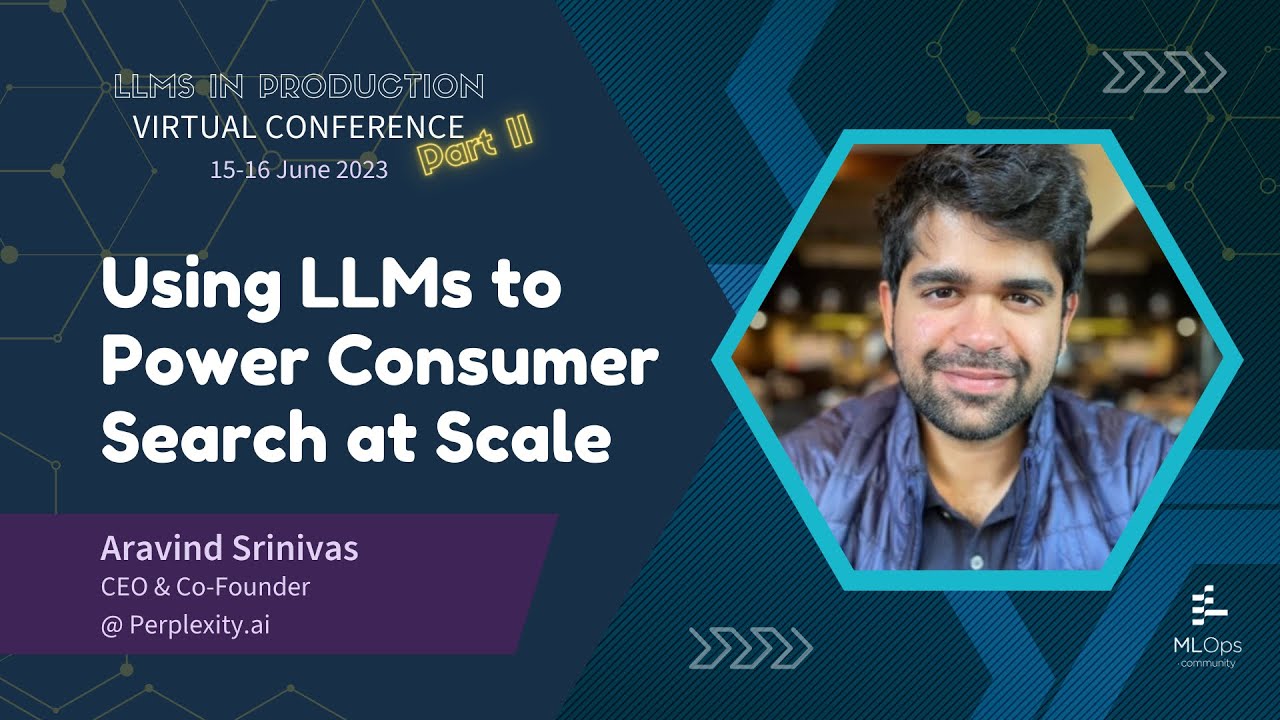 Using LLMs to Power Consumer Search at Scale
ClaimPerplexity is a retrieval-augmented generation system that combines a language model with a live search index so answers can use current information while retaining conversational reasoning capabilities.14:19
 Fireside Chat - The Future of LLMs
Pushed backDavid Hershey says LLM application observability is not the same as traditional monitoring because teams first need to determine whether the application works at all.28:47
 Taming AI Product Development Through Test-driven Prompt Engineering
Pushed backMaxime Beauchemin says prompt-evaluation results should not be treated as purely Boolean because language-model outputs can be partly correct.11:11
 PodcastAll About Evaluating LLM Applications
Pushed backShahul Es disputes the idea that benchmarks can guarantee how an LLM will perform in a particular application.12:29
 PodcastMLOps at GetYourGuide
Pushed backJean Machado argued that people should not be blocked from using LLMs because they do not use the platform's Python-centered templates, although the platform will provide managed tooling for use cases that need observability and controls.54:11
 PodcastMLOps vs ML Orchestration
ClaimKetan Umare says Union provides capabilities such as dynamic multi-cluster execution, role-based access control, single sign-on, task-level monitoring, and managed Kubernetes infrastructure.33:45
 Observability for LLMs
ClaimObservability is part of the toolkit needed to make large language model applications reliable over time.1:23
 The Truth About AI Agents
ClaimSilen Naihin says AutoGPT needed an objective reward function or benchmark because qualitative inspection of prompt changes did not show whether an agent had improved.17:10
 LLMs in Production at GetYourGuide
Pushed backThe GPT-4 evaluator was not consistently better than human evaluators, although it sometimes detected missed information and false positives.20:58
 Current State of LLMs in Production
Pushed backLLM-based evaluation is subject to evaluator bias, including a model favoring answers from itself or a related model.8:32
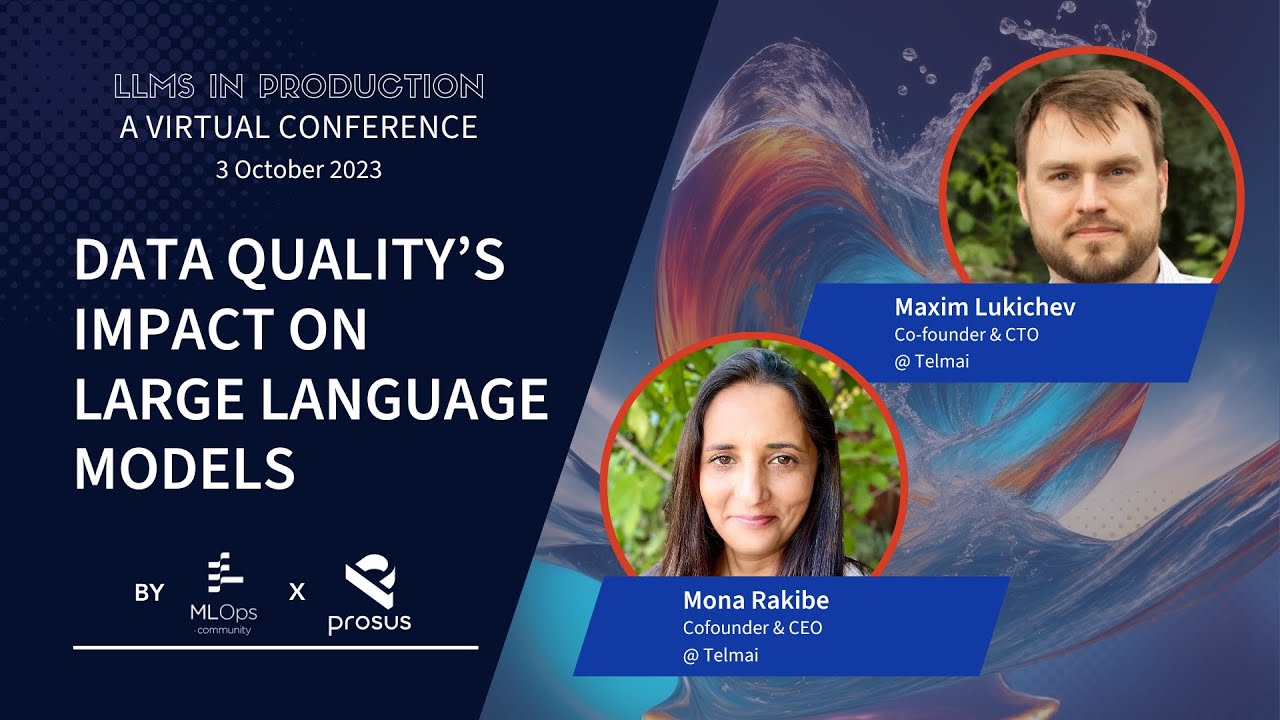 Data Quality's Impact on Large Language Models
ClaimData observability adds historical analysis to data quality by learning data behavior and identifying when current values or business metrics are anomalous.18:55
 From Building Self-driving Cars to Building LLM Applications
ClaimEffy Zhang is the CEO of Baserun, a testing and observability platform for applications.0:04
 PodcastBuilding Effective Products with GenAI
Pushed backUsing thumbs-up and thumbs-down feedback alone is not sufficient for evaluating generative AI output.50:26
 Building RAG-based LLM Applications for Production
Pushed backThe speakers said that human evaluation cannot be replaced completely by language-model evaluation, even though language models can make evaluation more scalable.9:56
 GenAI: An Unreliable Information Store
ClaimNoble Ackerson says retrieval augmented generation can provide fresher data when a model's training has stopped and enterprise data continues to change.16:59

 Product Engineering for LLMs
ClaimRetrieval-augmented generation makes it easier to turn large knowledge sources such as vehicle owner manuals into conversational assistants.12:05
 Authoring Interactive, Shareable AI Evaluation Reports with Zeno
Pushed backAlex Cabrera says labeled evaluation generally gives a stronger signal than label-free evaluation.19:06
 Evaluating LLMs for AI Risk
ClaimThorough LLM evaluation should address operational, ethical, and security risks using a combination of manual and automated red teaming.9:39
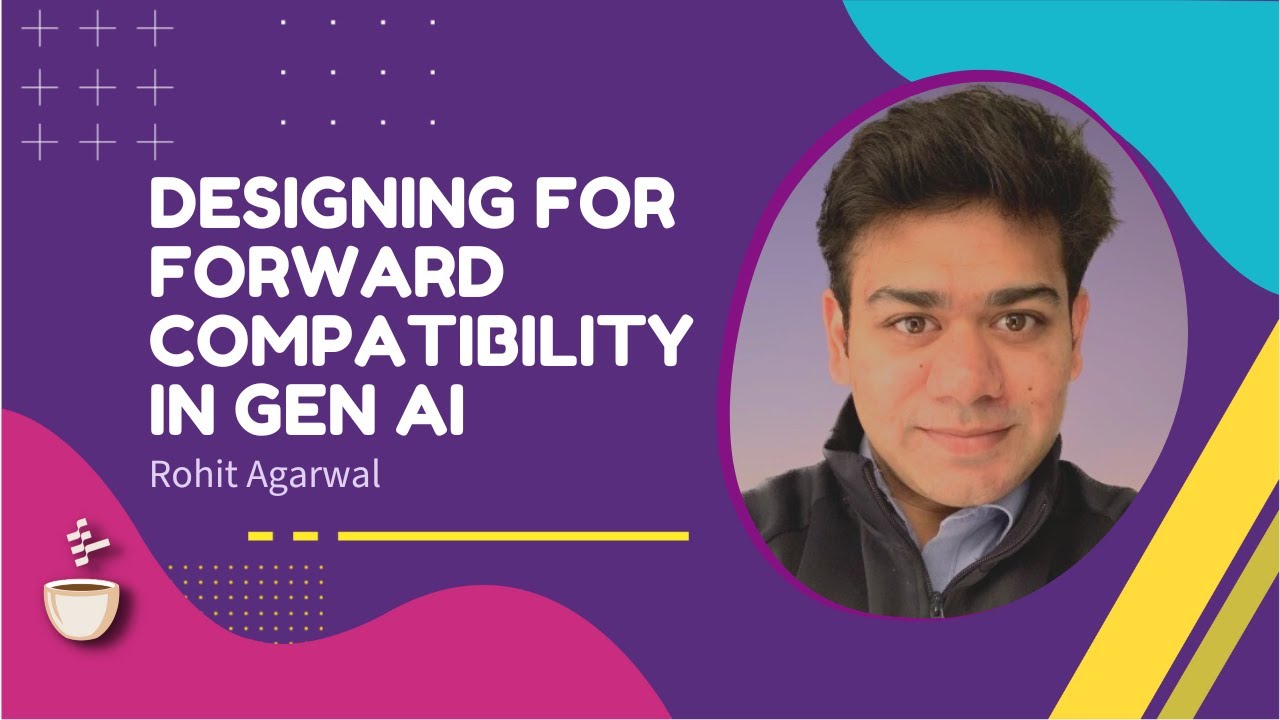 PodcastDesigning for Forward Compatibility in Gen AI
ClaimRohit Agarwal identifies summarization, question answering with retrieval-augmented generation, and generative writing tasks as three major production application types.16:35
 Model Blind Spot Discovery for Better Models
ClaimA systematic ingestion evaluation should hold all variables constant except one and compare results on a representative subset of the data.34:32
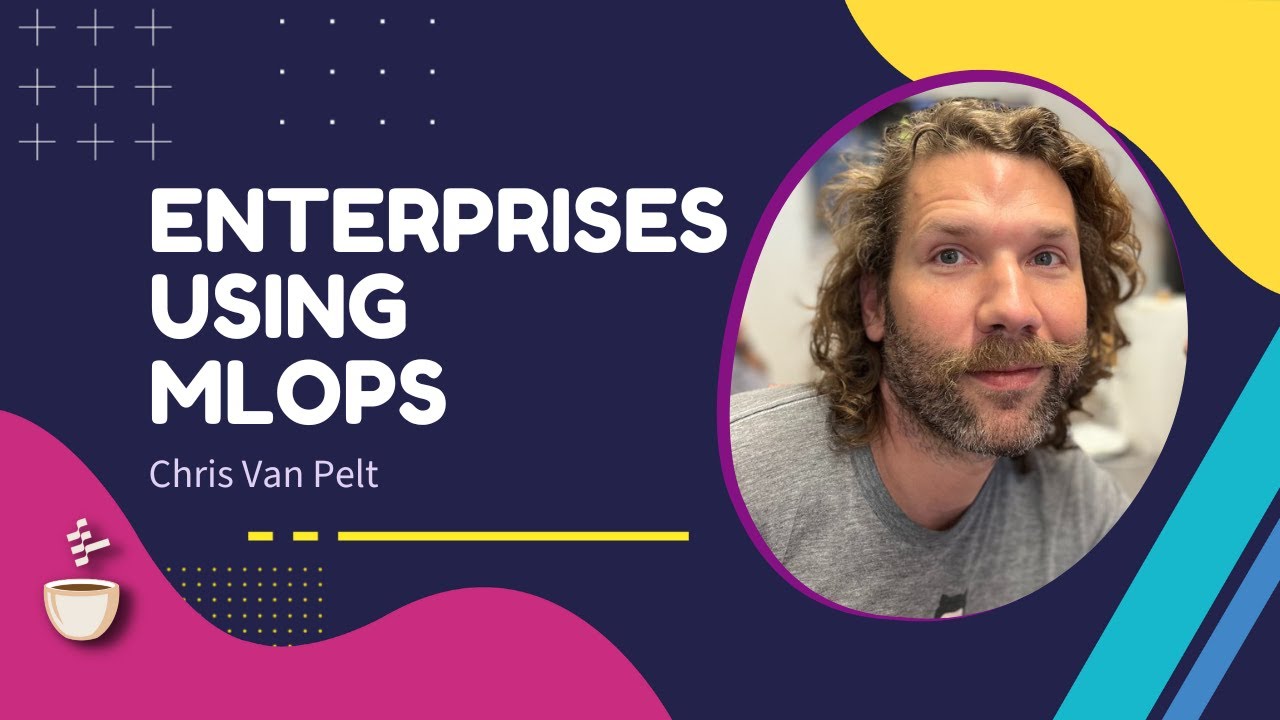 PodcastEnterprises Using MLOps, the Changing LLM Landscape, MLOps Pipelines
Pushed backChris Van Pelt argues that a thumbs-up or thumbs-down is not sufficient as the complete evaluation of a model or application.40:34
 MeetupScaling MLOps for Computer Vision
ClaimFabio Grätz says Recogni triggers benchmark workflows from feature-branch commits so proposed conversion changes can be evaluated across many networks.25:23
 PodcastBuilding the Future of AI in Software Development
ClaimCodeium evaluates code models by deleting code from open-source repositories and checking whether the generated code makes the repositories' unit tests pass.42:08
 PodcastModel Management in a Regulated Environment
ClaimModel Management covers the tools and processes across a model's whole life cycle, from collecting data and choosing an algorithm through training, evaluation, deployment, monitoring, and replacement.4:22
 PodcastLLMs in Focus: From One-Size Fits All to Verticalized Solutions
ClaimFor customer-specific text-to-SQL, the required training data usually does not already exist in a ready-made form, so it must be curated, labeled, evaluated, and handled with privacy constraints.33:24