Intelligence AI is building agents that work across the engineering lifecycle, from code changes and reviews to security fixes and team reporting.
2
Code agents need structured code context, efficient file reranking, and condensed information to make useful changes across large repositories.
3
Engineering teams need measures of code quality, security, collaboration, and impact because producing more code does not necessarily mean producing better software.
Summary
Aishwarya Shankar describes Intelligence AI's approach to making coding agents useful for whole engineering organizations. The system works at several levels: background agents handle tasks such as improving instrumentation and alerts, agents review code and suggest security fixes, and management tools synthesize work across pull requests and tickets. Shankar says the main technical problem is context. Retrieval-augmented generation misses details, while structured code lets an agent search through functions, classes, headers, and definitions. The system ranks relevant files, condenses their contents, and gives engineers an interactive plan before making changes. A second focus is production readiness, where agents inspect cross-repository effects, generate diagrams, identify small but important bugs, and provide feedback inside the IDE. Intelligence AI also evaluates code quality and security per pull request and gives teams sprint-level feedback. Shankar's argument is that AI should improve the work of the engineering organization, rather than only increase the speed of individual programmers.
Intelligence AI targets the whole engineering organization
Aishwarya Shankar says Intelligence AI is building artificial engineering intelligence for engineering teams. Its work ranges from background agents that handle tasks such as improving observability instrumentation, to code review, to reports that tell engineering managers what has shipped. The goal is to help a large engineering organization move faster across the full development process, rather than only helping one engineer write code more quickly.
AI coding still leaves safety and collaboration gaps
Shankar says AI coding tools are already useful, but organizations still need to deploy code safely, reduce security vulnerabilities, and keep engineers collaborating. Writing a large amount of code is no longer evidence that someone is a strong engineer. Teams also need to review pull requests quickly, catch problems, and address security while code is being written and reviewed.
Useful agents need a model of how engineers work with code
The team tried to reverse engineer how engineers build software so that an agent could execute a feature request well. Shankar identifies context as a major problem. Retrieval-augmented generation can miss details, while code has structure that allows an agent to search through function definitions, classes, and references. That structure gives the agent a better way to find relevant parts of a repository.
File reranking and context condensation make large changes more manageable
A change can involve as many as 100 relevant files, but passing all of them to an agent can make its coding worse. Intelligence AI reranks the files efficiently, then condenses the context by identifying important functions and retaining only details such as function headers and return types where possible. Shankar says these steps produce incremental improvements in the agent's ability to make focused changes.
The agent proposes a plan before editing the repository
In the demonstration, the agent searches a large codebase, creates a plan, and initializes the work in a sandbox. It searches sequentially using the file context it has collected, identifies where changes belong, and produces a detailed plan. Engineers can add steps to that plan before the programming agent edits files and drafts a pull request. This lets engineers guide the work without reviewing every line from the start.
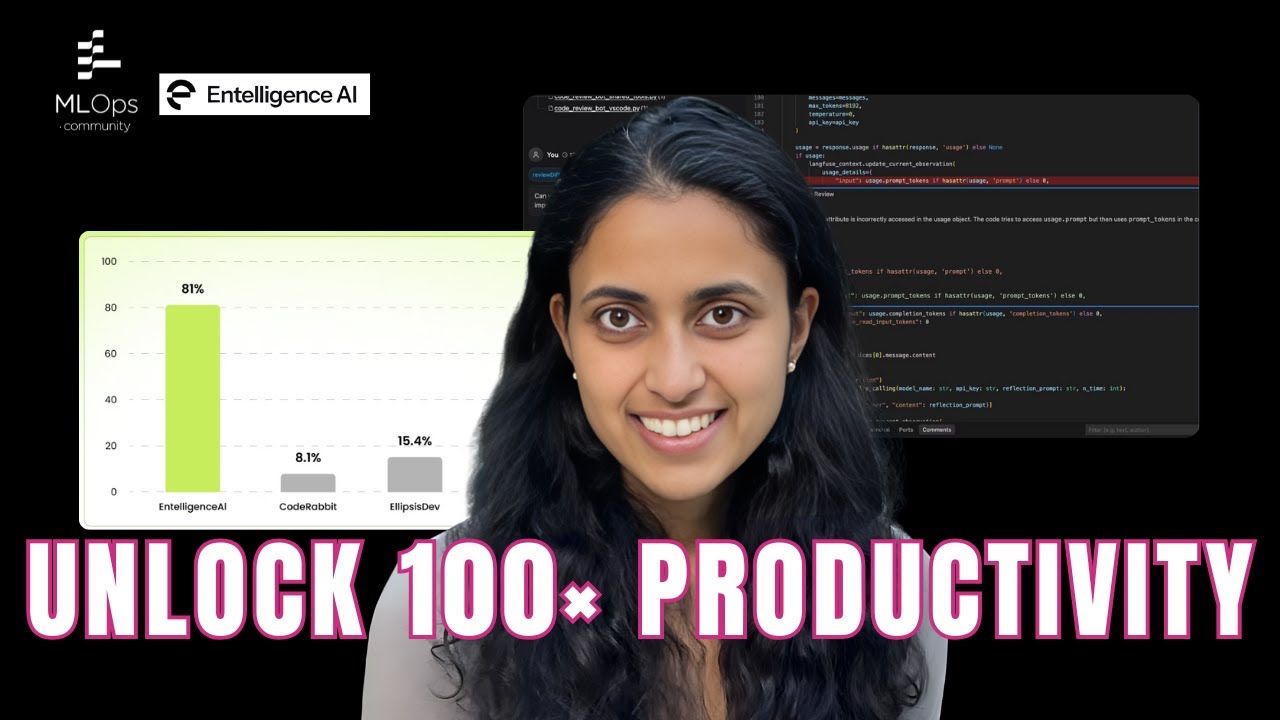
Shankar describes production readiness as another bottleneck because AI can generate very large code changes that still contain subtle bugs. The review system searches by file and function headers, definitions, and code context across the repository. It can generate diagrams and investigate which other files may be affected by a small change. Feedback appears in the IDE instead of waiting until code reaches GitHub.
Intelligence AI brings security into the development workflow by creating pull request fixes for vulnerabilities and other gaps in real time. Shankar contrasts this with organizations that treat security as an afterthought. The same context and review approach is used to identify problems while engineers are making changes, rather than only after the code has moved further through the delivery process.
Engineering management needs measures beyond lines of code
Shankar says faster individual engineers will not make the whole team faster if engineering management remains slow. Intelligence AI gathers work from pull requests, tickets, and other sources, then synthesizes it into feedback for engineers and team leads. A separate model evaluates code quality and security at the pull request level and provides sprint-level information about what is working. The system also relates AI usage to shipping metrics and code quality.