Pack · 8 talks · 8h 02m to watch, 47 min to read

Training pipelines and orchestration

The preprocessing finished, but training never started. A retry appended the same output twice. A failed final step sent you back through hours of unchanged work. These are execution problems around the model, and a scheduler only solves part of them. Begin with dependencies and the separation between coordinating a job and running its compute. Add failure handling, inspectable artifacts and safe reruns before considering more specialized execution. Flyte's history connects task interfaces to cached results; Spark and Kubeflow make the difference between submitting a job and waiting for its completion explicit. Aurora shows these pieces working together across long training workflows. Finish by examining whether the resulting workflow is understandable to the people who depend on it. The demonstrations illustrate execution decisions, rather than rank today's orchestrators.

1
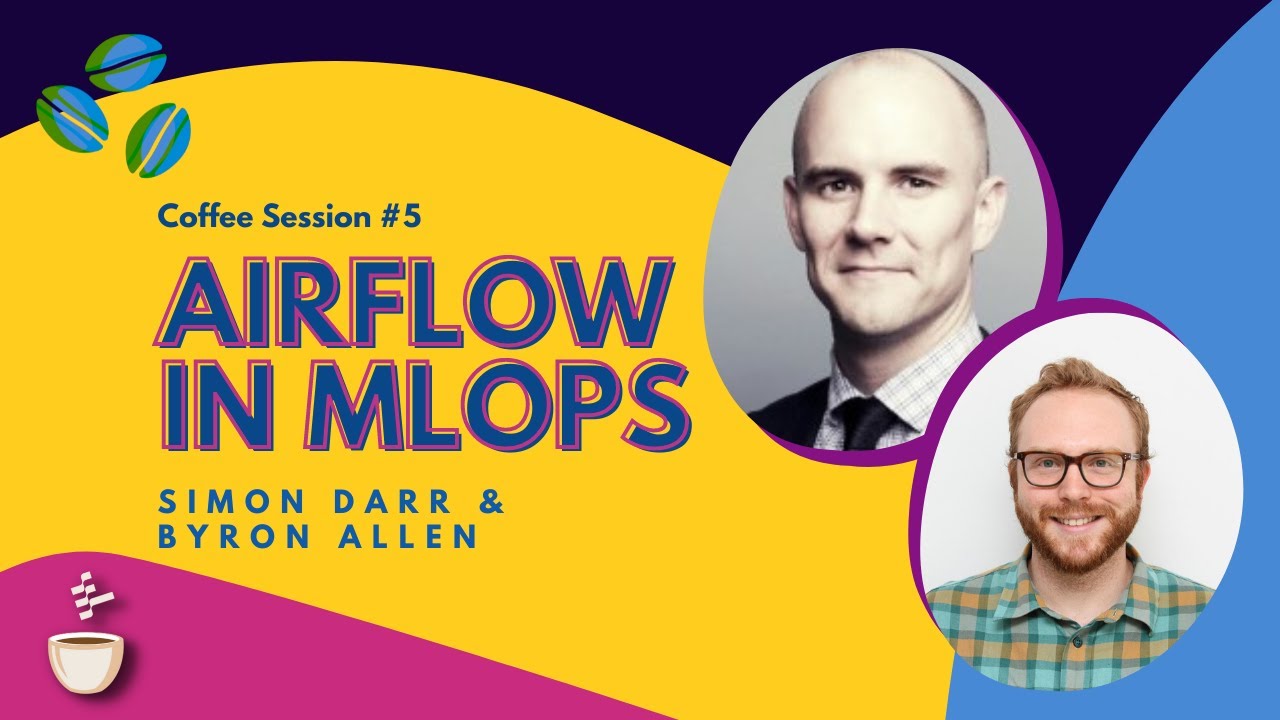
Simon Darr & Byron Allen, Servian · 53:33 · MLOps Coffee Sessions
Airflow in MLOps

Why first: Separate the coordinator from the computation. Darr and Allen use Airflow to order jobs while other systems do the processing, then explain why reruns must not repeatedly append or partially replace results. Their 2020 discussion establishes the execution contract before adding convenience around it.

4
Ketan Umare, Lyft · 1:05:06 · MLOps Coffee Sessions
Journey of Flyte at Lyft and Through Open-source

Why here: Reusing a result requires a system to connect it to the task and inputs that produced it. Umare's account of Flyte separates typed workflow definitions, execution and the data catalog used for caching. Its narrow orchestration scope also clarifies which surrounding ML responsibilities still belong elsewhere.

5
Ketan Umare, Union.ai · 1:11:12 · MLOps Coffee Sessions
Why You Need More Than Airflow

Why here: Some training jobs need checkpoint transfer and execution resources that a simple task wrapper does not provide. Umare's later account treats these as reasons to delegate particular workloads, while keeping existing Airflow jobs that already work. Specialized execution can be an addition rather than a wholesale migration.

7
Maurizio Vitale, Vinay Anantharaman & Ankit Aggarwal, Aurora · 54:57 · MLOps Meetup
Team Aurora: Accelerating ML with Kubeflow

Why here: Aurora combines the earlier decisions in a long-running ML workflow. Build artifacts, orchestration and compute remain separate, while reusable components launch work on batch systems and SageMaker and report its outcome. The case shows how several execution systems can participate in one traceable process.

8
Alex Milowski, Entrepreneur and Computer Scientist · 1:14:35 · MLOps Podcast
Evolving Workflow Orchestration

Why last: A runnable workflow can still be hard to understand. Milowski examines what gets lost when compact Python replaces an inspectable process description, especially for collaborators who cannot read the implementation. After arranging tasks and failure paths, check whether the people using the result can explain what must happen before each step runs.